Basketball in Patras: a city beyond one club
Basketball in Patras is best understood as a collection of club histories, playing spaces and spectator habits. Olympias is one part of that picture. A useful city guide connects those stories while keeping separate teams, historical periods and current match information clearly identified.

Look at the city before choosing a team
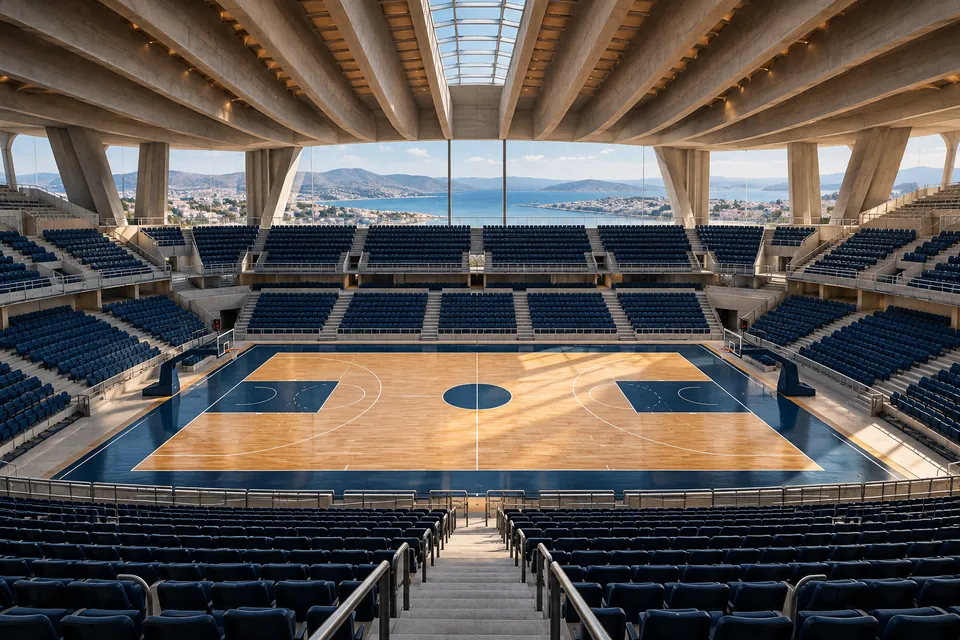
A basketball trip often begins with a fixture, but the city around it shapes the experience. A sports hall may sit outside the streets where you plan to eat, walk or stay. The distance between those places matters more to a visitor than an attractive photograph of the skyline. Begin by locating the actual event entrance and then build a realistic day around it.
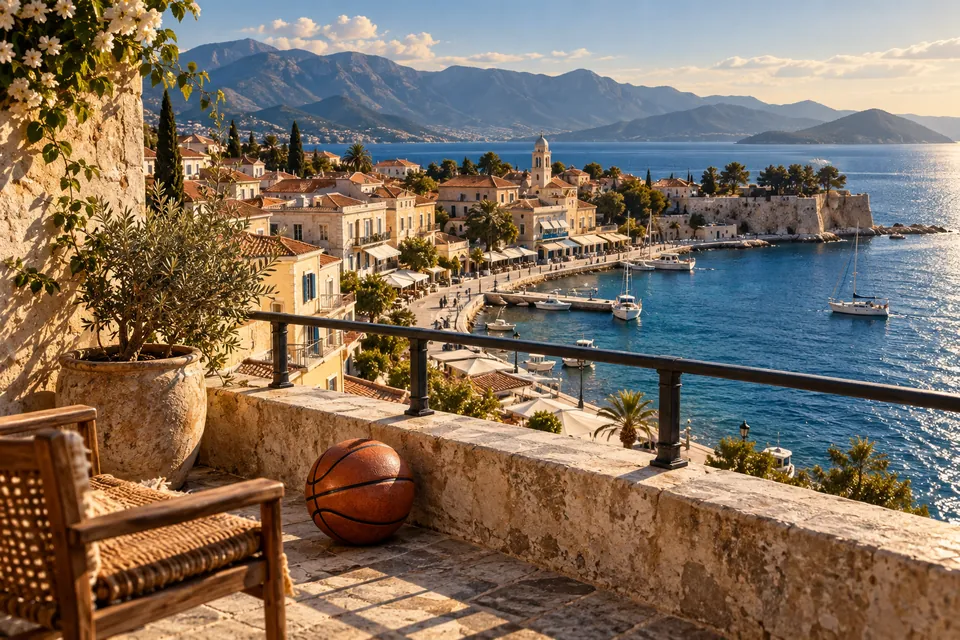
Patras provides a broader setting than the arena alone. The national tourism organization describes a port city with a historic upper town and a castle. Those are useful starting points for exploring between basketball commitments, not evidence about any club's sporting achievements. Keeping travel context separate from club history allows both subjects to be described accurately. It also helps visitors avoid booking accommodation on the mistaken assumption that every sports venue is central. [3]
Three names do not make one institution
Olympias, Apollon and Promitheas appear in discussions of Patras basketball, but they should not be treated as different names for a single club. Each identity needs its own historical record. Shared geography can explain why they belong in one city guide; it does not establish common ownership, a merger or a direct line of succession.
The practical consequence is straightforward. Use the organizing club's own information for a contemporary game. For example, the Promitheas website provides team and match material under its own identity. That is a source for that club, not a substitute official channel for Olympias. When reading older reports, note the complete team name before adding an event to your research. This small habit prevents errors that can otherwise spread through several related articles. [4]
The local game has more than a scoreboard
Spectators can learn a great deal by observing how a basketball space is used. Look at the relationship between the court and the stands, the way people arrive, and the rhythm of warm-ups. These observations describe the event you are attending. They become unreliable when generalized into claims about every Patras supporter or every season of local basketball.
Community sport is also easy to overlook when the only measure of interest is national television coverage. Training, youth participation and volunteer work are important questions for a city publication, but specific claims about a program require documentation. A club's published academy information can be a starting point. Visiting a public court is not an invitation to photograph children or enter private training sessions; ask before recording people and respect the boundaries of the space. Start with the Olympias history for the club-specific record.
Put historical success in the right frame
A club's period in a national division is one way to organize a city history, but it should not become a ranking of which supporters matter. Different competitive levels create different kinds of records. A well-indexed senior season may be easier to research than years of neighborhood activity, even though both have cultural value.
For Olympias, this publication uses identifiable domestic records and a FIBA competition entry as its starting evidence. The detailed history article explains the limits of that approach. When comparing clubs, use the same categories on both sides: league season against league season, or published youth provision against published youth provision. Comparing one club's entire institutional lifespan with another's single senior campaign produces a dramatic story but a weak historical argument.
How to be a considerate visiting spectator
Attend with curiosity and a willingness to follow local instructions. Find the seat category and entrance shown on your ticket, keep aisles clear and ask staff before moving into another section. If you want to understand a chant or banner, a polite question after the immediate excitement has passed is often more productive than interrupting someone during play.
There is no need to perform an exaggerated version of local support. Neutral clothing and ordinary courtesy are sensible choices for a first visit, subject to any event-specific guidance. Never assume a rivalry makes every interaction hostile, or that a friendly conversation proves a city-wide attitude. An honest travel account can describe a memorable exchange as one person's experience. That restraint produces a better cultural portrait than a collection of sweeping stereotypes.
A useful half-day around the game
Plan the non-sporting part of your day as a flexible loop rather than an itinerary timed to the minute. Choose one main walk, one meal and a clear departure point for the arena. The castle and upper-town context can provide a contrasting view of Patras, while the municipal tourism material offers a way to check details about the Roman Odeon. Opening arrangements should be confirmed directly before a visit. [5]
Keep a gap between sightseeing and the journey to the game. The aim is to arrive ready to watch warm-ups, not to race from a monument to a security queue. If the match time changes, a flexible city plan is easier to rearrange. Our sports-tourism guide develops this approach into a full visit, while the arena guide focuses on finding the correct venue. The Patras sports-tourism guide develops a flexible city itinerary.
Research the city with several kinds of evidence
A balanced reading list should contain more than match reports. Competition archives establish sporting participation. Club publications explain how an institution presents itself. Tourism sources describe the urban setting. Contemporary journalism may preserve details that formal tables omit. Each source answers a different question, and none should be forced to answer all of them.
When taking notes, write down what a source actually supports. An official fixture notice can confirm an announced venue and time, but not guarantee that those details will never change. An older photograph can show a court arrangement without establishing today's accessibility provision. This source-by-source discipline is useful both to readers and to future local historians. It lets Patras remain a living basketball city with several stories, rather than a static backdrop to one nostalgic narrative. Use our venue-planning guide for the practical arena questions.
A few useful answers
Does Patras basketball mean only Olympias?
No. A city history includes distinct clubs and sporting spaces; their identities and records should remain separate.
Where should I check a current game?
Use the organizing club's official fixture and ticket announcements, then reconfirm the venue and time before travel.
Sources & further verification
Sources checked for this edition on 22 October 2026. Historical records and live announcements serve different purposes.
Olympias Club Editorial
Independent historical basketball and sports-culture coverage. No claimed club affiliation or individual professional credentials.
Read our editorial policy →